Homes & businesses · North East England
Hazardous waste disposal & specialist collection
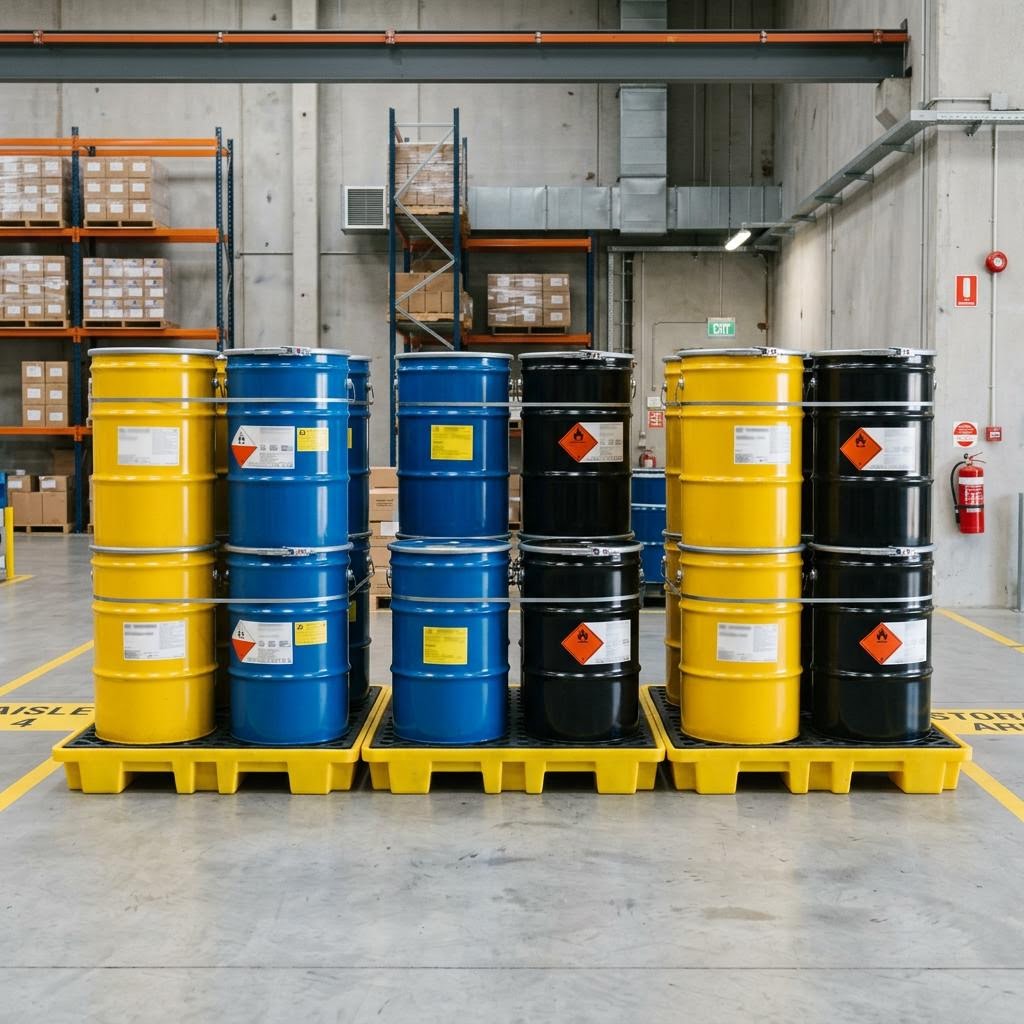
Unwanted chemicals, waste oils or materials that cannot go into ordinary rubbish? GRIDCO helps arrange hazardous waste disposal across Newcastle, Northumberland and Teesside through suitable registered carriers and authorised facilities. Tell us what you have so the right collection route can be confirmed.
Request a hazardous waste collection quote · Call 0191 323 5082 · Discuss your hazardous waste on WhatsApp
Included with our waste services
Every job includes a waste transfer note.
Commercial customers also receive a waste report every month.
Looking for hazardous waste disposal near me?
A local hazardous waste service needs more than a postcode. The operator must know what the waste is, how much there is, its condition and whether specialist packaging or transport is required. GRIDCO is based in Blyth, Northumberland. We coordinate suitable services through specialist operators; we do not own a hazardous waste treatment plant or operate a public drop-off centre.
Our core coverage includes Newcastle upon Tyne, Blyth, Cramlington, Ashington, Bedlington, Morpeth, Ponteland, Hexham and surrounding Northumberland communities. We also arrange services in Teesside, including Middlesbrough, Stockton-on-Tees, Hartlepool, Darlington, Redcar and Yarm. Collection availability depends on the waste stream, postcode, quantity and site conditions.
If you are searching for hazardous waste disposal near me, send the waste description, approximate quantity, postcode and any existing label or safety data information. Photographs can help only when they can be taken safely without approaching or disturbing the waste. We confirm suitability, price and availability before a collection is booked.
What is hazardous waste?
Hazardous waste is waste that has properties which can harm people or the environment. It may be flammable, corrosive, toxic or harmful in another way. Examples include certain chemicals, solvents, non-edible waste oils, asbestos and some electrical equipment. The correct classification depends on the actual material, its composition and the activity that produced it.
A product hazard label or safety data sheet is useful evidence, but it does not by itself replace waste classification. Some waste types have hazardous and non-hazardous entries in the List of Waste, so an assessment may be needed. Do not guess a waste code from a photograph or assume that every paint, battery or electrical item has the same classification.
Keep an accurate description of what you know, and say clearly if the contents are unknown. A contractor may need further information, analysis or a site assessment before acceptance. Unknown waste is not suitable for a routine general rubbish collection.
Hazardous waste types to discuss with us
These are examples of enquiries we can assess, not a blanket acceptance list. Each waste stream must be identified and accepted by a suitable operator before transport is arranged. Tell us about separate containers and any damage rather than combining materials into one load.
- Waste oils and vehicle fluids: used lubricating oil, oily residues and certain automotive fluids, depending on composition and contamination.
- Paints, solvents and chemicals: unwanted coating products, solvent-based materials and identified chemical residues, with labels or safety data where available.
- Contaminated packaging and absorbents: containers, wipes or materials contaminated by hazardous substances, subject to assessment.
- Batteries and hazardous electrical equipment: some batteries, fluorescent lamps, cooling equipment and other WEEE need separate specialist routes.
- Construction and property waste: potentially contaminated materials or suspected asbestos must be assessed separately before any collection can be considered.
- Other specialist waste: describe the material first. Clinical waste, sharps, explosives, radioactive substances and unknown laboratory chemicals are not ordinary collection items and may require a different specialist service.
Hazardous waste disposal rules in England
The following overview applies to England and our North East service area. Scotland, Wales and Northern Ireland have separate regulatory guidance. Always check the official sources and obtain advice for your particular waste rather than relying on a general webpage as a classification decision.
Businesses that produce, store or have hazardous waste removed must classify it, keep it separate and store it safely. They must use authorised businesses, check the carrier's registration and confirm that the receiving site is permitted to accept that waste. Paying someone else to remove it does not remove your duty of care.
Hazardous waste generally needs a correctly completed consignment note prepared before it moves. The producer or holder, carrier and receiving facility have different responsibilities for completing and retaining the paperwork. For businesses in England, the producer or holder must keep the hazardous waste register, including consignment notes, consignee returns and related records, for three years at the premises that produced or stored the waste.
There are specific exceptions. Domestic hazardous waste, other than asbestos, can move from a domestic household to an initial collection point without a consignment note under the relevant exemption. This is not a blanket exemption for all journeys or all waste generated at a residential address. Asbestos and business-related movements need particular care.
- Identify and classify the actual waste before collection; provide existing composition and safety information where available.
- Do not mix hazardous waste with general waste, other incompatible hazardous wastes or non-waste substances. Business mixing rules have limited permitted exceptions, not an informal permission to dilute waste.
- Check registered waste carriers and the receiving site's environmental authorisation for the specific material.
- Agree suitable packaging, labelling, handling and any dangerous-goods transport requirements with the specialist operator before movement.
- Use the correct consignment documentation where required and retain the relevant records.
Household hazardous waste disposal
A garage, shed or house clearance can uncover old chemicals, paints, oils or unfamiliar containers. Do not treat these as ordinary mixed clearance waste. Check your council's rules for household hazardous waste: acceptance, appointment requirements, quantity limits and charges differ between services.
Household rules are not identical to business rules. The general business prohibition on mixing hazardous waste does not apply in the same way to domestic householders, but you must follow your local authority's waste-segregation instructions; asbestos is treated separately. Do not put chemicals into drains or dispose of unfamiliar substances by guessing which bin to use.
GRIDCO can assess an enquiry for a collection from your property, subject to the material and local operator availability. We are not a household recycling centre and do not offer walk-in drop-offs. If waste was generated through trade or commercial activity, tell us that rather than presenting it as ordinary household rubbish.
Commercial hazardous waste collection and paperwork
Workshops, trades, maintenance teams and property managers may produce several hazardous waste streams at once. An accurate inventory helps prevent a collection being rejected because the load is different from the description. Include the source activity, material names, quantities, container sizes and condition, and any existing waste assessment.
Every GRIDCO job includes a waste transfer note. Hazardous waste consignment documentation is also arranged where legally required: a waste transfer note is not a replacement for a required consignment note. Every commercial customer receives a waste report every month, alongside the records appropriate to the individual movement.
Tell us about site inductions, restricted access, loading arrangements and who will be available to hand over the waste. The specialist operator must be able to check the agreed waste and paperwork before transport. A collection quote does not authorise your business to treat, mix or repackage waste on site.
Asbestos and unidentified materials need specialist assessment
Suspected asbestos should not be broken, drilled, swept up or disturbed to make disposal easier. A photograph is not enough to confirm that a material is asbestos or that it is safe to remove. Use a competent asbestos professional to assess the situation and advise on the work required; some asbestos work requires an HSE-licensed contractor.
Ask your council about domestic asbestos disposal arrangements or seek a specialist contractor. Any GRIDCO enquiry involving asbestos is subject to separate assessment and explicit acceptance; this page is not an offer of asbestos surveying or removal. Asbestos waste movements require the appropriate specialist controls and consignment documentation.
Likewise, do not open unlabelled drums, smell substances or combine leftovers to identify them. Explain that the contents are unknown. Specialist identification and a suitable plan may be needed before anyone can quote for removal.
How much does hazardous waste disposal cost?
There is no reliable universal price for hazardous waste disposal. Cost depends on the waste classification, composition, quantity, container condition, packaging needs, treatment route, postcode and site access. Testing, specialist handling or dangerous-goods transport may affect the quote.
To avoid misleading estimates, tell us about every waste stream and whether any contents are unknown or containers are damaged. Share existing documents and safe photographs rather than moving or opening waste to obtain more detail. We confirm the agreed scope, price and collection requirements before booking.
We do not promise free collection, acceptance of every material or guaranteed same-day removal. For small quantities of household material, a council service may be more appropriate; check its conditions first. For planned commercial collections, speak to us early so the information and appropriate operator can be confirmed.
What to provide when requesting a hazardous waste collection
The first step is an accurate enquiry, not preparing hazardous materials yourself. Leave specialist handling, packaging and collection requirements to the agreed operator. If the waste is unstable, leaking or presents an immediate danger, do not wait for a routine quote.
- Your postcode, site type and whether the waste is from a household or a business.
- The waste description, source activity and approximate quantity; state when the contents are unknown.
- Existing labels, safety data sheets, previous analysis or classification records, if available without handling the waste.
- Container numbers, sizes and condition, including any known damage or leakage.
- Access and loading restrictions and a suitable site contact.
- Safe photographs only where they do not require approaching, opening or disturbing the material.
Hazardous waste disposal FAQs
Where can I find hazardous waste disposal near me?
Households should check their council's hazardous waste arrangements. For a planned collection enquiry, GRIDCO covers Newcastle, Northumberland and Teesside through suitable independent operators, subject to the material, postcode and availability. We do not operate a public drop-off centre.
What counts as hazardous waste?
Waste is hazardous when its properties can harm people or the environment. Certain chemicals, solvents, oils, asbestos and electrical equipment are common examples, but the actual material must be classified. A product name or photograph alone may not be enough.
Can hazardous waste go in a normal skip?
Do not put hazardous materials into a general mixed-waste skip. Declare the material to the provider and arrange an explicitly accepted specialist route. Hidden hazardous items can endanger people and cause a load to be rejected.
Do I need a hazardous waste consignment note?
Hazardous waste movements generally require one, including collections from businesses. Specific exceptions include domestic hazardous waste other than asbestos moving from a household to an initial collection point. The correct documentation depends on the waste and journey; a transfer note is not a substitute where a consignment note is required.
How long must my business keep hazardous waste records?
In England, a hazardous waste producer or holder must keep its register for three years at the premises that produced or stored the waste. This includes consignment notes, consignee returns and relevant supporting records.
Can you arrange disposal of paint, chemicals or waste oil?
Send the material description, quantity, postcode and any existing label or safety data information. Suitability must be assessed and confirmed by the appropriate operator; not every product has the same classification or collection requirements.
Do you remove asbestos?
This page does not offer asbestos surveying or removal. Suspected asbestos needs competent specialist assessment and may require an HSE-licensed contractor. Any disposal enquiry is subject to separate assessment and explicit acceptance; do not disturb the material to prepare it for collection.
What should I do with an unknown or leaking chemical container?
Do not open, sniff, mix or move it to identify the contents. Keep away and seek specialist advice. If there is a dangerous release, fire or immediate risk to people, move away and call 999. GRIDCO's enquiry service is not emergency spill response.
How much does hazardous waste collection cost?
The price depends on classification, quantity, container condition, handling, transport, treatment and location. Further assessment may be needed before a quote. GRIDCO confirms the scope, price, acceptance and availability before booking.
What paperwork will GRIDCO provide?
Every job includes a waste transfer note, with hazardous waste consignment documentation arranged where legally required. Commercial customers also receive a waste report every month. Keep the movement records and any consignee returns required for your business.
Official guidance and useful checks
England-specific guidance. Check the official sources for updates and advice about your particular waste.
- GOV.UK: hazardous waste overview
- GOV.UK: hazardous waste producers, holders and three-year records
- Environment Agency: hazardous waste segregation and mixing
- Environment Agency: consignment note guidance and domestic exceptions
- GOV.UK: asbestos in your home and council disposal information
- Environment Agency: check registered waste service providers
Arrange a planned hazardous waste collection
Send the known waste description, quantity, postcode and existing safety information. Do not disturb materials to prepare an enquiry. GRIDCO confirms acceptance, price and availability before booking.
Request a hazardous waste collection quote · Call 0191 323 5082 · Discuss your hazardous waste on WhatsApp
For electrical equipment, see our electrical waste disposal and WEEE guide.
Frequently asked questions
Where can I find hazardous waste disposal near me?
Households should check their council's hazardous waste arrangements. For a planned collection enquiry, GRIDCO covers Newcastle, Northumberland and Teesside through suitable independent operators, subject to the material, postcode and availability. We do not operate a public drop-off centre.
What counts as hazardous waste?
Waste is hazardous when its properties can harm people or the environment. Certain chemicals, solvents, oils, asbestos and electrical equipment are common examples, but the actual material must be classified. A product name or photograph alone may not be enough.
Can hazardous waste go in a normal skip?
Do not put hazardous materials into a general mixed-waste skip. Declare the material to the provider and arrange an explicitly accepted specialist route. Hidden hazardous items can endanger people and cause a load to be rejected.
Do I need a hazardous waste consignment note?
Hazardous waste movements generally require one, including collections from businesses. Specific exceptions include domestic hazardous waste other than asbestos moving from a household to an initial collection point. The correct documentation depends on the waste and journey; a transfer note is not a substitute where a consignment note is required.
How long must my business keep hazardous waste records?
In England, a hazardous waste producer or holder must keep its register for three years at the premises that produced or stored the waste. This includes consignment notes, consignee returns and relevant supporting records.
Can you arrange disposal of paint, chemicals or waste oil?
Send the material description, quantity, postcode and any existing label or safety data information. Suitability must be assessed and confirmed by the appropriate operator; not every product has the same classification or collection requirements.
Do you remove asbestos?
This page does not offer asbestos surveying or removal. Suspected asbestos needs competent specialist assessment and may require an HSE-licensed contractor. Any disposal enquiry is subject to separate assessment and explicit acceptance; do not disturb the material to prepare it for collection.
What should I do with an unknown or leaking chemical container?
Do not open, sniff, mix or move it to identify the contents. Keep away and seek specialist advice. If there is a dangerous release, fire or immediate risk to people, move away and call 999. GRIDCO's enquiry service is not emergency spill response.
How much does hazardous waste collection cost?
The price depends on classification, quantity, container condition, handling, transport, treatment and location. Further assessment may be needed before a quote. GRIDCO confirms the scope, price, acceptance and availability before booking.
What paperwork will GRIDCO provide?
Every job includes a waste transfer note, with hazardous waste consignment documentation arranged where legally required. Commercial customers also receive a waste report every month. Keep the movement records and any consignee returns required for your business.
Share this article
LinkedIn · Facebook · WhatsApp · X · Message
Article link: https://gridcowastemanagement.com/hazardous-waste-disposal